2026-11-13
The modern vehicle is no longer just a mechanical machine; it is a complex, data-driven ecosystem. At the heart of this evolution lies the wiring harness—the "nervous system" that facilitates communication between ECUs, sensors, and power systems. When sourcing a SOAR custom vehicle wiring harness, engineers and procurement managers must look beyond simple connectivity.
The choice between a passenger vehicle harness and a heavy-duty commercial harness involves distinct trade-offs in thermal resistance, mechanical durability, and signal integrity. Understanding these nuances is critical for ensuring long-term vehicle reliability and minimizing field failures.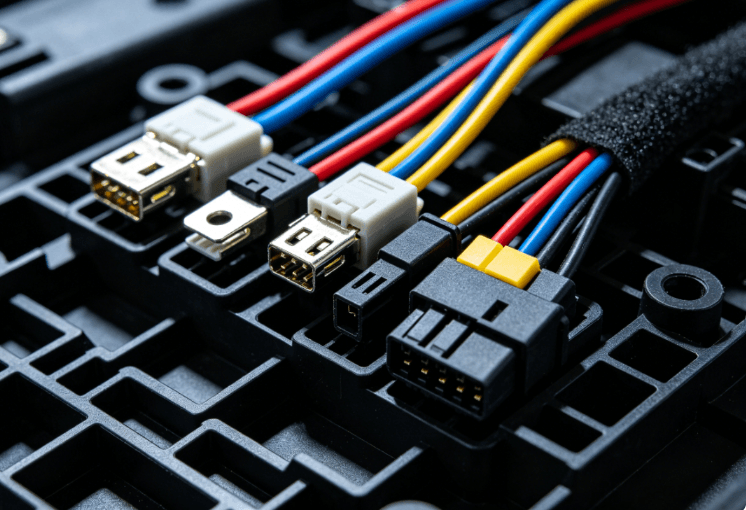
A custom wiring harness is an integrated assembly of cables, terminals, and connectors that transmit both electrical power and information. Unlike off-the-shelf solutions, custom harnesses are engineered to fit specific spatial constraints and environmental conditions.
For passenger vehicles, the focus often leans toward weight reduction and high-speed data transmission for Infotainment and ADAS (Advanced Driver Assistance Systems). In contrast, commercial vehicle harnesses—designed for trucks, buses, and construction equipment—must prioritize high-voltage capacity and resistance to extreme vibration and chemical exposure.
The engineering of a SOAR custom vehicle wiring harness ensures that every gauge of wire and every connector housing is optimized for the specific load profile of the target application.
Selecting the right harness architecture depends on the operational environment of the vehicle. Below is a comparison of the technical requirements typically encountered during the specification phase.
| Feature | Passenger Vehicles | Commercial / Industrial Vehicles |
|---|---|---|
| Typical Voltage | 12V / 48V (Mild Hybrid) | 12V / 24V / High Voltage (EV Trucks) |
| Mechanical Stress | Standard vibration | High vibration & mechanical shock |
| Environmental Exposure | Contained (sealed chassis) | High exposure (salt, oil, mud, hydraulic fluid) |
| Service Life | 10–15 years | 20+ years / 1,000,000+ miles |
| Primary Driver | Weight reduction & EMI shielding | Durability & repairability |
Commercial harnesses often utilize thicker insulation, such as Cross-linked Polyethylene (XLPE), to withstand higher temperatures in engine compartments. Passenger vehicles may utilize ultra-thin wall PVC to shave grams off the total vehicle weight, aiding in fuel efficiency and battery range.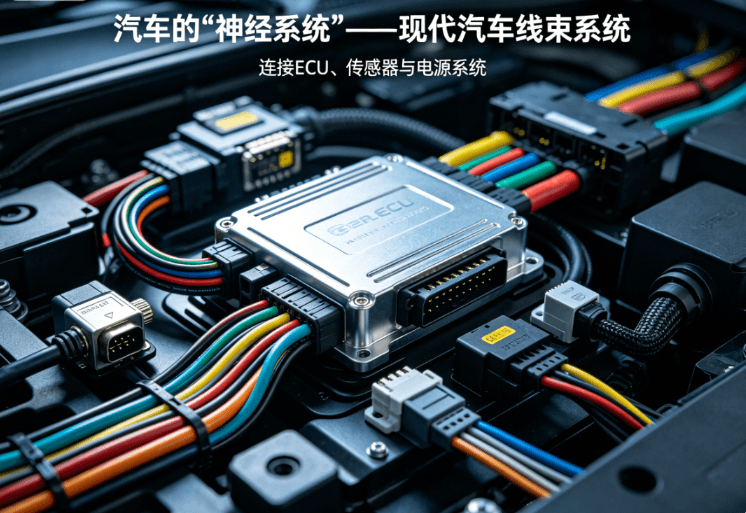
When designing a SOAR custom vehicle wiring harness, three primary technical factors determine the success of the integration:
The choice of jacketing material is governed by the ISO 6722 standard. For under-the-hood applications, harnesses must withstand temperatures up to 125°C or even 150°C. In commercial logistics, resistance to diesel fuel and battery acid is mandatory. Utilizing high-quality connectors (such as Deutsch or TE Connectivity standards) ensures that the entry points for moisture are effectively sealed, preventing terminal corrosion.
As vehicles become more autonomous, the risk of Electromagnetic Interference (EMI) increases. Custom harnesses for passenger EVs require sophisticated shielding for high-speed data lines. SOAR’s manufacturing process incorporates twisted-pair wiring and braided shielding to ensure that safety-critical data from LiDAR and camera systems remain uncorrupted by the high-voltage noise of the powertrain.
Modern commercial fleets often require modular harness designs. This allows for easier maintenance and the addition of aftermarket telematics or refrigeration units. A well-designed custom harness reduces "wire nest" complexity, utilizing sub-assemblies that click together, which significantly lowers assembly line time for OEMs.
A wiring harness is only as reliable as its weakest crimp. In the automotive industry, adherence to IATF 16949 and IPC/WHMA-A-620 standards is the benchmark for quality.
When evaluating SOAR custom vehicle wiring harness solutions, project managers should look for:
By leveraging the capabilities found on SOAR’s automotive harness platform, manufacturers can access high-precision customization that aligns with these rigorous global standards.
For procurement teams, understanding what influences the price of a SOAR custom vehicle wiring harness is essential for budget accuracy.